Friendship Head Lighthouse
Motherless BrooklynFriendship Head Lighthouse is the coastal meeting place where Lionel Essrog and Julia Minna face one another with guns after Lionel has traced the tangled history surrounding Gerard Minna and the Fujisaki Corporation. Set above the open water, it becomes both a vantage point and a boundary: the pair can see danger coming, yet cannot find common ground, and the encounter ends with both weapons cast into the sea.
Setting and Arrival
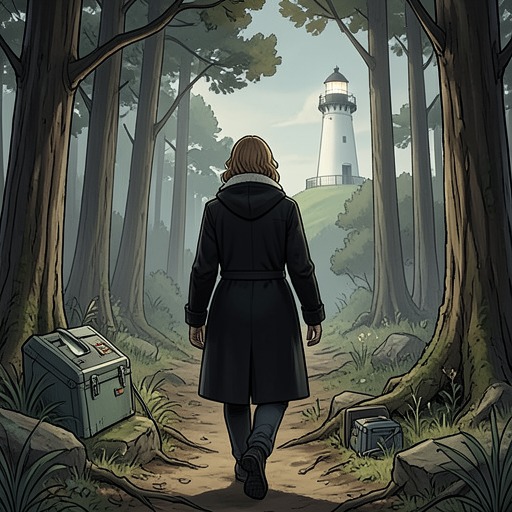
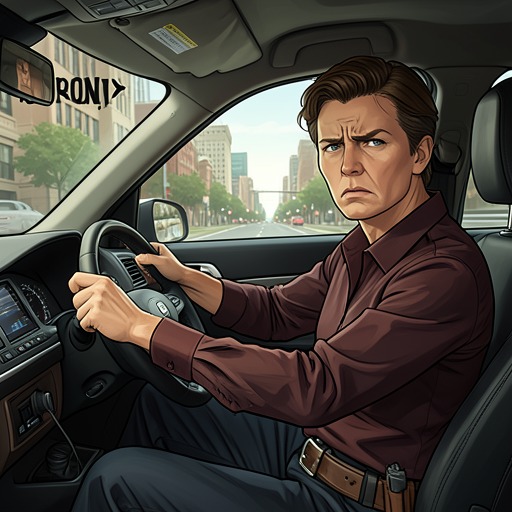
Friendship Head is an outcropping on the coast, twelve miles north of Musconguspoint Station. Its lighthouse is painted red and white, a conspicuous contrast to the subdued earth tones Lionel associates with the restaurant he has recently visited. He drives Tony Vermonte’s Pontiac from the vacant ferry landing to the lighthouse, parks as close to the water as possible, and waits there for Julia. He is half an hour early for their planned meeting.
The wait follows a violent episode at the Muscongus Island ferry. Lionel has a bitten tongue, a stiff neck, and a throbbing head where the giant struck him the previous day. He tests his neck’s movement because it matters to his life with Tourette syndrome, and judges the injury to be like whiplash rather than something worse. He is chilled and tired, and the restorative effect of the lemongrass broth he had consumed has worn off. Even so, the water looks inviting as the light changes. The lighthouse setting gives this moment of exhaustion an unusual pause: Lionel is alive, alone beside the sea, and waiting for a meeting whose stakes are not yet settled.
Before leaving the ferry landing, he calls the local police to report the giant there. He tells them the man may be badly injured but appears to be alive, and warns that they may need the Jaws of Life to remove him. The call links the lighthouse to the violence left behind without bringing that violence physically into the waiting place. Lionel has driven away from the wreckage, but the injury in his head and neck remains with him.
The Lighthouse as a Vantage Point
At the sea-facing rail, the wind is still strong, though Lionel has grown accustomed to it. He raises his collar as Frank Minna would. The sky beyond the island is gray, but a line of light at the horizon gives him something precise to follow with his eyes, like a seam. Below, birds search the foam among the rocks for sea urchins or scraps of food. The scene is spare and exposed: land, water, sky, and a narrow edge of light, with little to shelter the people who meet there.
The elevated view also makes the lighthouse a practical lookout. Lionel has Tony Vermonte’s gun in his jacket, and he and Julia can see a long way down Route 1 in either direction. He feels an urge to protect her, partly because he wants to believe he has helped someone else pass safely through danger. Yet he doubts that the Fujisaki Corporation is directly concerned with either of them, and recognizes that Julia and he have each been caught up in Gerard Minna’s problem. Julia does not welcome his protective impulse. The wide view allows them to watch for an approaching threat; it cannot make them trust each other.
A Meeting Turns into a Standoff
The conversation at the lighthouse concerns the brothers’ history and the money behind the Yorkville Zendo. Lionel tells Julia that Frank Minna became involved in a scheme to siphon money from the Fujisaki Corporation’s management company, working with a bookkeeper named Ullman. He has now understood that Gerard Minna’s account of events was not simply false: it was shaped to make Gerard appear innocent while concealing his own central role. The lighthouse meeting is therefore not just a reunion or a farewell. Lionel arrives with a revised understanding of the past and tries to make Julia hear it.
The meeting shifts when Julia asks Lionel to light her cigarette. As he turns away from the wind to do so, she takes a gun from her purse. Lionel raises his hands, at once in surrender and self-protection, while Julia points the weapon at his abdomen. He feels the danger physically and wonders whether becoming accustomed to being held at gunpoint is anything worth wanting. He then draws Tony Vermonte’s gun. Julia tightens her grip, but neither fires.
The landscape recedes as the two stand at the rail facing one another. Although they are at a lighthouse above the Maine coast, Lionel experiences the guns as making the setting irrelevant, as if the ocean and sky were only an image on a television. He recognizes the intimacy and force of the moment: his weapon is aimed not at Gerard, the giant, Tony, or a doorman, but at Julia, Frank Minna’s widow. He slips off the safety. The lighthouse’s far-reaching view has brought no perspective capable of resolving the immediate choice before them.
Disarmament and Departure
Lionel does not shoot. Before his finger can move on the trigger, he throws Tony Vermonte’s gun toward the ocean. He counts the act, then lunges for Julia’s weapon, twists it from her hand, and hurls it still farther, out toward the waves forming beyond the rocks. Julia backs away and asks him not to hurt her. The removal of the guns changes the encounter from a mutual threat into a separation neither can mistake for reconciliation.
Julia retrieves her lighter and succeeds in lighting her cigarette on the first flick. Lionel says goodbye. Her response is angry, and she directs a Tourette-like verbal outburst at him; he treats his own final words on the subject as spoken. The lighthouse thus holds the decisive end of their meeting without supplying a resolution to the history that brought them there. The sea receives both weapons, but the act only ends the immediate danger. The two leave the rail with their differences—and the past surrounding Frank Minna—still between them.